Tim Fox’s work

The adaptation.

A new telling of the 1871 novel, not a reprint of the book. The short film, the feature workbook, the visual locks, and the collectible-card inventory below are Tim Fox’s original materials.

Logline

What the new work is about.

A mining engineer falls into a hidden world beneath the earth, where a serene winged race has given up war and dissent in exchange for Vril. When their princess falls in love with him, he learns what perfect power costs—and carries the warning back into the old world.

Vril, in this telling, is the novel’s dangerous promise of perfect power: a force that can heal, erase, order, and rule without visible effort. The film stays inside a period world. Its planned closing image is a 1920s mining town at dusk, where the engineer sees the underworld’s light beneath an ordinary street and understands that the Vril-ya are waiting for the surface to become worthy—or vulnerable.

Guardrails

The production bible keeps the novel’s ambivalence. It avoids Aryan iconography, runes, “master race” framing, and occult “Vril Society” mythology, which is not in the 1871 text. The Vril-ya are to be cast as eerie and utopian, not as heroic overmen.

Two scales, not two stories

A short, a proof,
and a feature draft.

These are related production tracks. They should not be conflated as one finished film, and none of them is a released picture.

Short film

3:28 silent short

A thirty-shot Fritz Lang–style silent film, locked in the production bible at 208 seconds of picture plus 10–15 seconds of credits and an optional content warning. Aspect is 1.33:1. The target finish is 1 January 2027, for Chroma Awards Season 2 (official close 7 January 2027, 11:45 PM PT). That is a target, not a release date. Shots are planned; the film is not released.
Proof

Five-minute proof

A continuous silent-era short of about five minutes of picture, plus credits, meant to prove stable character locks, readable world geography, and the same story arc (Descent, City, Price, Ascent, Coda). It extends the short’s spine with coverage. It is not a second, contradictory story. Status: preproduction, with character and world locks in progress and approved as of 5 November 2026.

Feature

Twenty-nine chapters

A longer novel-adaptation workbook, drafted 1 May 2026, with twenty-nine chapters and 334 planned shots. A feature screenplay exists and states that nothing in that document has been filmed. Delivery milestones in the workbook are not marked complete. This is a draft, not a finished feature.

Picture and sound

A late silent,
early-sound hybrid.

The locked look is a 1927 German Expressionist silent film in the style of Fritz Lang: black-and-white orthochromatic stock, a 1.33:1 full-bleed frame, hard key light, deep shadows, and geometric architecture. Surface and mine shots are planned as a real period industrial mine—headframe, tipple, shaft collar, tracks—not an abstract sculpture.

The grade, locked 4 November 2026, uses one tint scheme only: amber for the surface and the mine, cyan-blue for the underworld, and untinted black-and-white for the coda, with surface amber returning only in the final practical lamp.

Sound is planned as a late silent / early sound hybrid. A continuous orchestra score is intended in the mix, with three leitmotifs: a machine pulse for Vril, celesta and violin for Zee, and a heartbeat for the narrator. Story is carried by intertitles. A small number of short English spoken lines is allowed. No score or final mix is claimed to exist yet on this site.

Draft intertitles

These six cards are from the short-film bible. They are created in the edit, not baked into generated picture. The third card is the film’s interpretation, not a factual claim about the novel.

  1. THE COMING RACE Title card · “After Edward Bulwer-Lytton.”
  2. Below the earth, a light that was not fire.
  3. They had ended war by ending choice. The film’s interpretation
  4. What Vril could heal, it could also erase.
  5. Do not seek us. We wait for the surface to be ready.
  6. The light remains beneath us.

People and places

The locked figures
of the short.

Descriptions below follow the approved production bible and character locks of 5 November 2026. In the 1871 novel, the boy’s name is spelled Taee.

Approved front lock of the narrator, an American mining engineer with a safety lamp
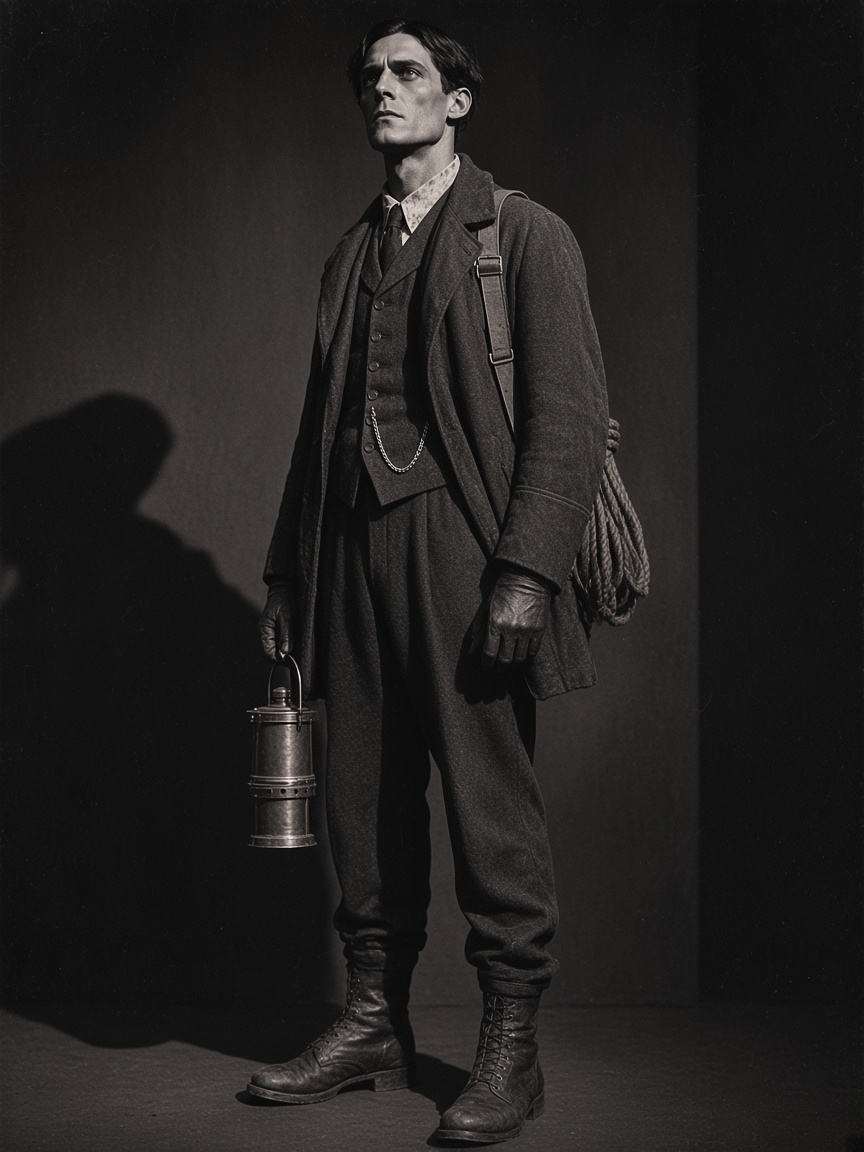
The narrator An American mining engineer, about 35, gaunt and clean-shaven, dark hair parted in the middle, in a dark wool three-piece suit, with a 1914 Wolf safety lamp. Continuity lock, approved 5 November 2026.
Approved front lock of Zee, a very tall Vril-ya woman with folded mechanical wings and a staff
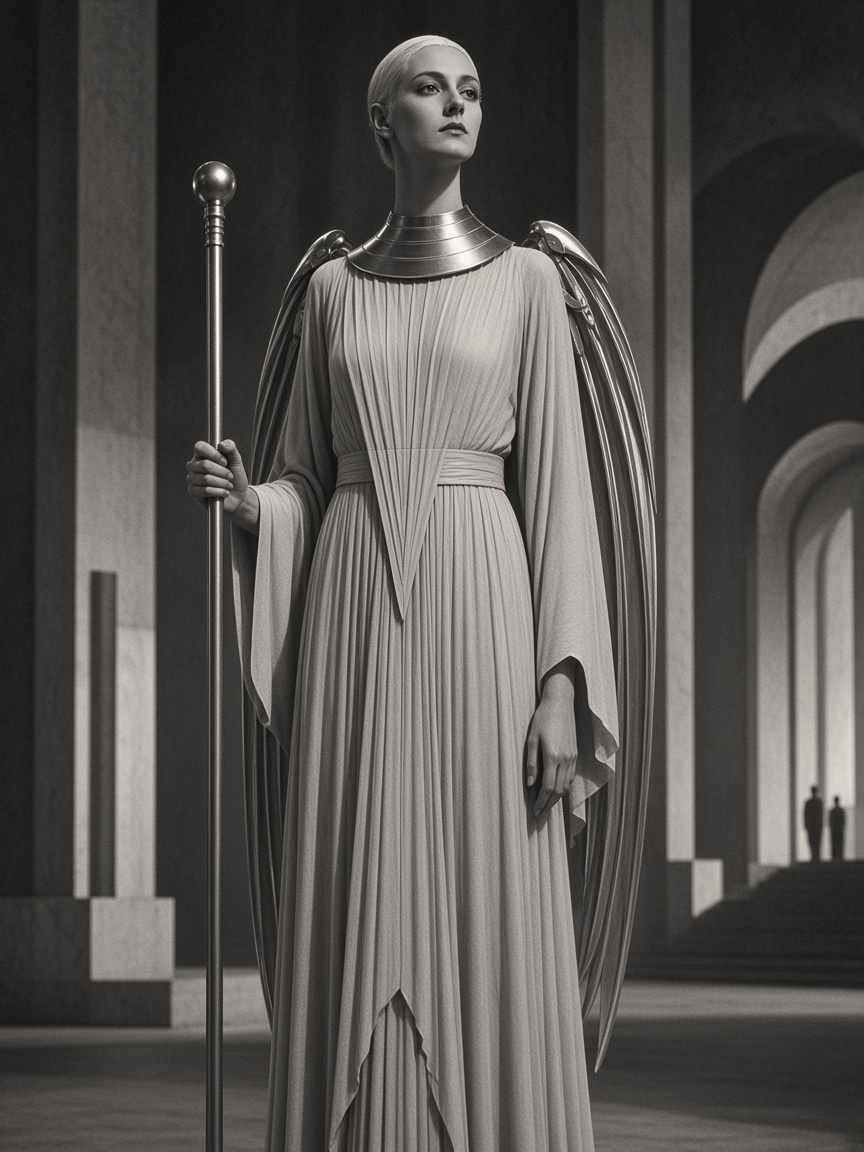
Zee A very tall Vril-ya woman, about seven feet, with a serene sculpted face, close-cropped pale hair, a long pleated tunic, a geometric metal collar, folded mechanical wings of thin silver ribs, and a slim silver staff. Continuity lock, approved 5 November 2026.
Approved front lock of Aph-Lin, a tall elderly Vril-ya man with a concentric-ring medallion
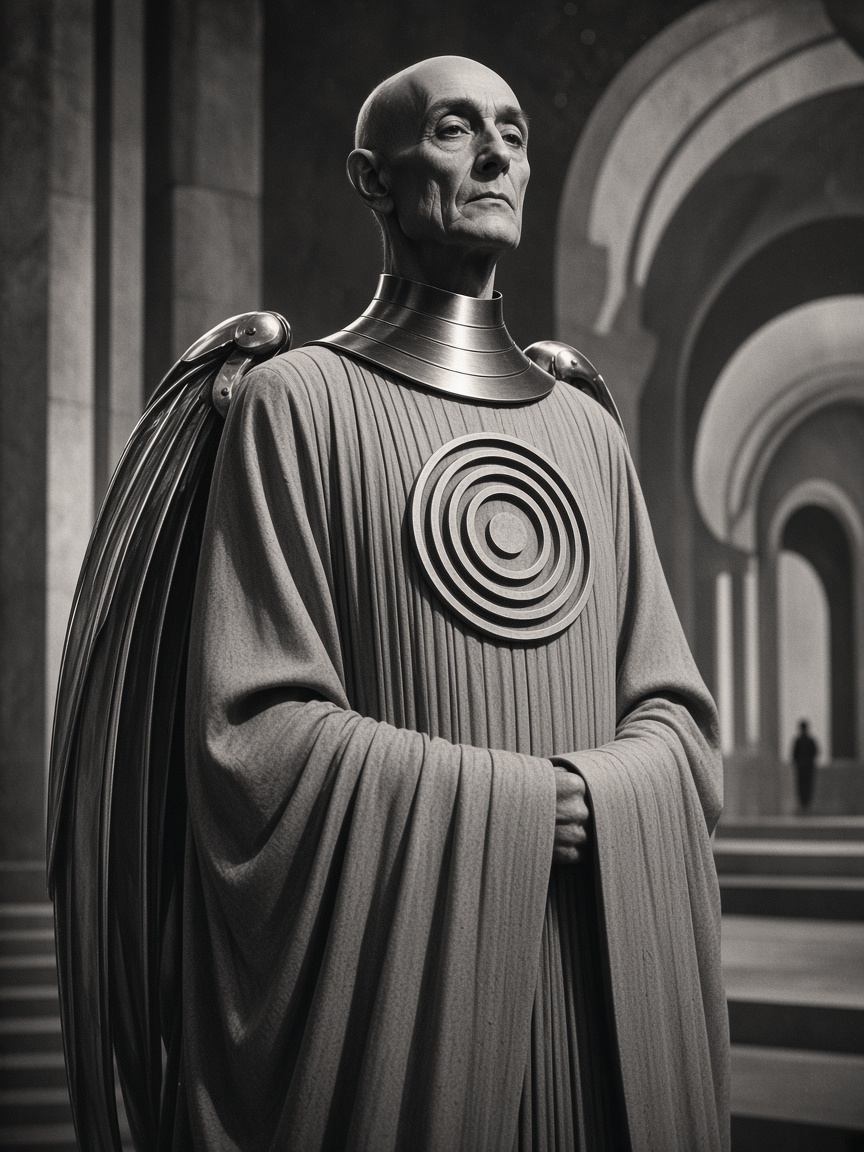
Aph-Lin A tall elderly Vril-ya man, bald, lined, with calm heavy-lidded eyes, a high-necked pleated robe, a medallion of three concentric rings, and folded silver wings. Continuity lock, approved 5 November 2026.
Approved front lock of Tae, a Vril-ya boy with a short rod and small wings
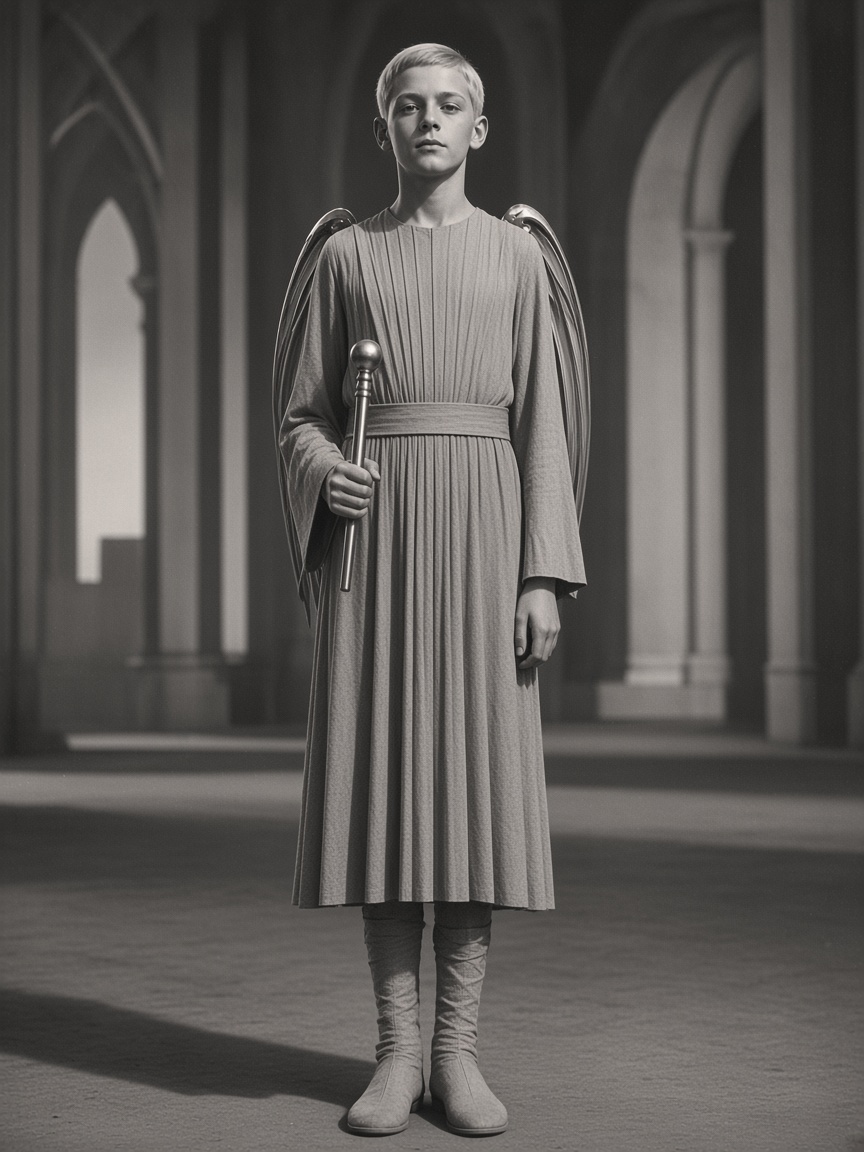
Tae A Vril-ya boy about 12, with the same tall serene features, short pale hair, a knee-length pleated tunic, small silver wings, and a short rod with a ball finial. Called Taee in the 1871 novel. Continuity lock, approved 5 November 2026.

Also in development

Collectible world cards.

There is a collectible-card inventory for exploring the film’s world, with a small table game called Journeys Below. The inventory currently lists 97 cards across character, place, prop, scene, and costume families. The recorded status is “design and inventory, not final art.” Most cards are planned and not rendered. No print run, scarcity, or sale is claimed. A shop placeholder lives on the support page.

What this is not

This page is not a trailer, a release announcement, or a claim that the short or the feature is finished. Production stills on this site are continuity references. The 1871 novel remains free to read, unchanged, on its own pages.